 고무-금속 접착 접착제

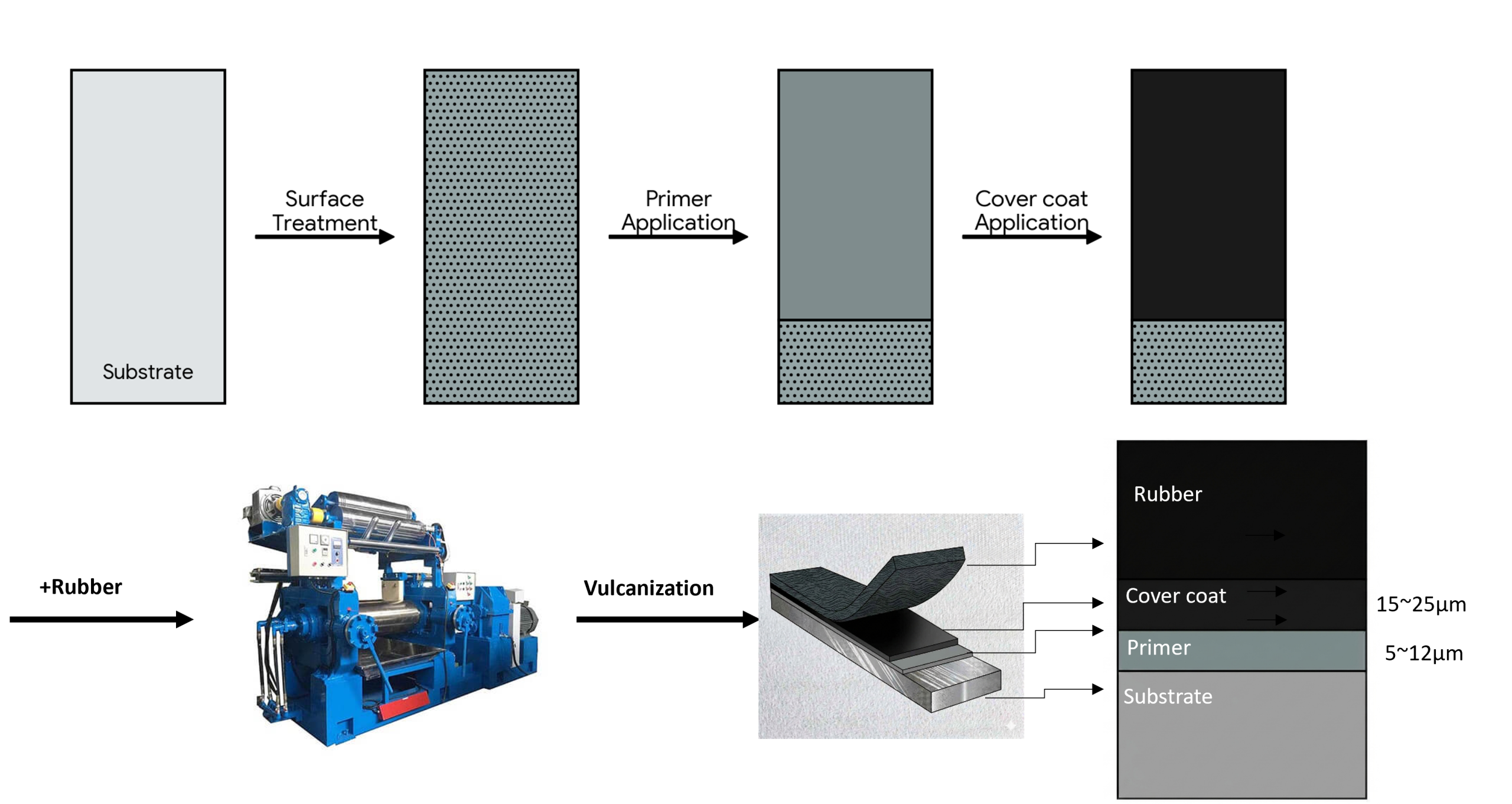
Rubber to Metal Bonding Process
Rubber to metal bonding is highly versatile and widely used across various industries. In the automotive sector, it is utilized for creating seal gaskets and engine mounts. In agriculture, this bonding method is employed to manufacture components such as ball joints and stabilizers. Additionally, the medical industry benefits from rubber to metal bonding in the production of O-rings and pump compressor isolations.
With the expansion of the construction industry, rubber to metal bonding is also applied in the creation of conveyor belts, which are essential for efficient construction due to their strength and durability. In the mass transit sector, it is used for making valve seals and pedals. The durability provided by rubber to metal bonding ensures longer-lasting parts, contributing to both user safety and equipment reliability. The effectiveness of these applications depends on the use of appropriate materials.
Q1: What is the key application process?
A: All the processes are very important especially the stirring and viscosity.
Q2: Are batch-specific Certificate of Analysis (COA) and SDS provided?
A: Yes. Every distinct production lot is dispatched with an official Certificate of Analysis (COA) documenting empirical purity, isomer distribution, and exact NCO value. We also supply updated Safety Data Sheets (SDS) fully compliant with GHS, REACH, and regional environmental mandates. All the proces